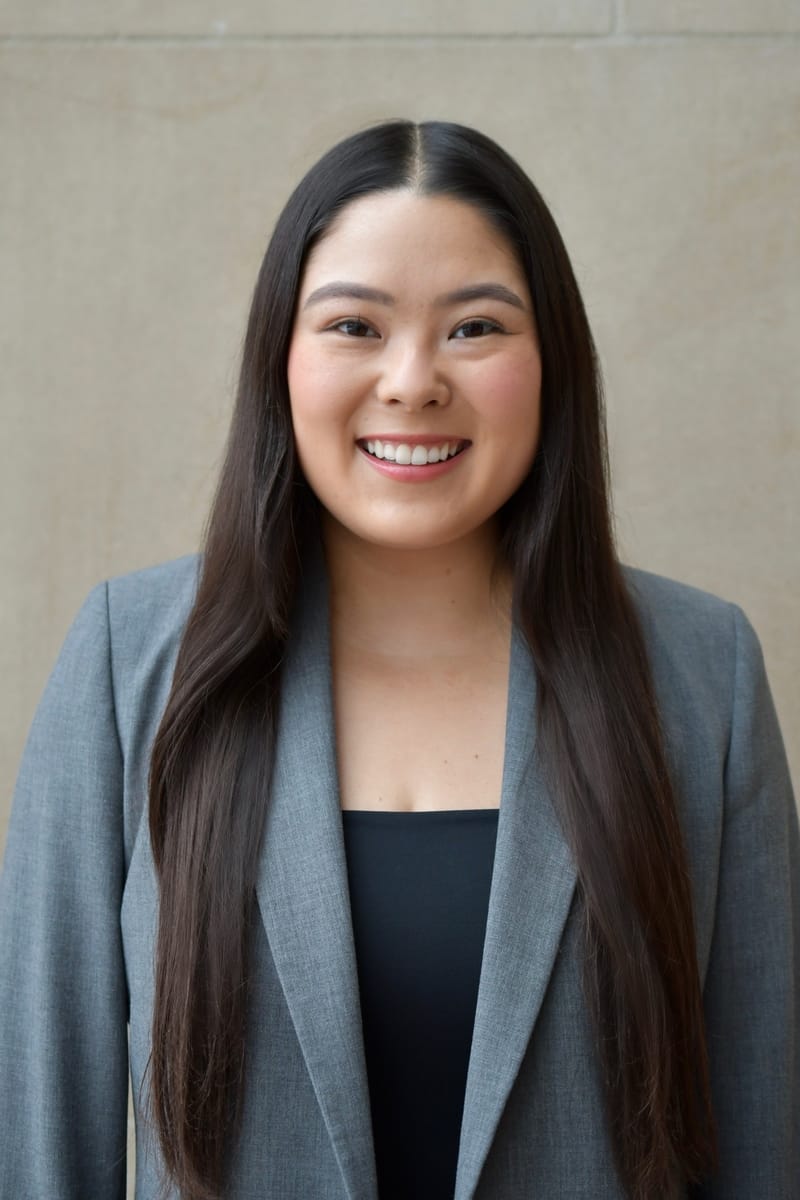

Courtesy of Caitlyn Kumi
Caitlyn Kumi is a personal finance, career and business creator, LinkedIn Top Voice, and Forbes 30 Under 30 recipient. She worked at Google before pursuing content full time and is the founder of Miss EmpowHer, a digital media company and women’s community.
This interview has been edited and condensed.
Dylan Wells: Talk me through your pre-creator journey, and what exactly it was that you were doing before you embarked on this path.
Caitlyn Kumi: I started my career [as a student] at UNC Chapel Hill. I was working in their entrepreneurship center, and that is really the time where I think the entrepreneur bug really started to get the best of me. That's where I learned what angel investing is, what VC is. I was in the earliest stages of building my women's community media company and starting to do some small content creation.
But given the nature of that space, being very male dominated, there weren't a lot of women. Nobody really understood the vision at the time. But it was definitely really great for learning some of those technical foundational business skills, and then when I graduated from university, I worked as a consultant. [It] is a grind, long hours, late nights. But it was really great for the professionalism, learning how to put together deals and proposals, learning how to sell, learning how to just figure things out when you have no idea what's going on.
I was definitely on my networking grind, and then I pivoted to Google, and I actually leveraged some of my experiences as a content creator, as the founder of Miss EmpowHer, to get that job at Google by sharing some of the things I did. At the time, the company was really looking for people who knew social. The key buzz words were “social first;” we want to be culturally relevant.
I had done a YouTube series and interviewed different women with exciting careers. It completely flopped. But a person that I interviewed worked at Google. She loved what I was building. She could see the transferable skills and offered to refer me to this really competitive program, and that was really what propelled my career.
I started more on the B2B marketing side, doing customer marketing, working with the engineers, working with [the] product [team]. At the time, I wanted to work on influencer marketing. But those experiences were really fundamental because now, as a content creator as I've left corporate, I work on a lot of B2B clients. I sometimes have to speak to engineers, product managers, and I know how to talk to them because I did that work for almost two years.
Now that I'm a full-time creator and founder, a lot of people are like, "How are you getting these partnerships? How are you navigating?” But the reality is I kind of treated my time at Google as a way to really learn the fundamental skills that I need.
DW: How did you navigate working in corporate while also building your personal brand?
CK: Being a corporate creator and having something that you're building outside, your experience is going to be really different depending on the company you work for. I was fortunate enough to have discernment — like there were some things that I definitely turned down during that time, but you know sometimes you do have to make sacrifices for the long-term.
The number one compliment I always get from execs when I go to my influencer events, when I do partnerships, is “you have executive presence.” When someone books me or when they work with Miss EmpowHer, it's not always just a one-off deal, it's an integrated partnership. We do media days, we have the brand partnership, we're thinking about how we extend the moment, but I wouldn't have those strategic thinking skills … if it weren't for those experiences.
But in my time balancing in corporate, I think I was definitely gatekeeping the process behind the scenes of how I did it all. The reality is if you want to grow and you want to do a lot without losing your mind — sleep is important, working out is important — it's really important to outsource and have systems. I was definitely that person using AI note takers, using different tools to help me balance out my schedule. I was waking up early to film content and really doing a lot of batch creating. … I was stifled in a way in terms of creativity, but I really did the best I could with what I've got. And then when it came to editing, I would edit it on my commutes to work. So I was really about maximizing that time — if I knew I had a brand event, I would do my makeup early for work. That way, as soon as 5pm hits, I was there. If there was a meeting, like a one-on-one, where we don't have to be on camera, I would try to schedule it at the end of day and do it like on an Uber on the commute. I was doing all of those hacks.
DW: What exactly is Miss EmpowHer?
CK: We are a women's community and media company that's focused on supporting, connecting, and uplifting women professionals, founders, creatives, and investors. We do that through our content, our community, and our events that are centered around education and exposing these women to new environments, new people, or new information to help them get to that next level. We have been hosting our signature events like Sip and Socialize, which is for PR media professionals, women who work in influencer marketing. We have been hosting our Women Who Network annual event that's really centered around career, entrepreneurship, finance. But we were continuously getting feedback that these women in their late 20s and their 30s are really looking for intimate connections, intimate events.
Our women are looking for more information around financial literacy, but this is a community for the multifaceted woman, the everyday woman. So we also want to do beauty workshops with some of our favorite beauty brands, and I'm really into this theme of world building.
DW: How do you think about your own personal brand partnerships versus facilitating campaigns within your business with Miss EmpowHer members?
CK: When it comes to Caitlyn Kumi and my personal brand, I definitely started out as a traditional corporate girl who was building her personal brand. But as I've evolved and I've changed, and I'm going into this next chapter, I really think my personal brand is really a nice mix of entrepreneurship and lifestyle. I have this phrase that has always inspired me and has kind of been like my version of Sasha Fierce, which is “becoming a pretty wealthy woman” — Beyonce has Sasha Fierce, I have “becoming a pretty wealthy woman.”
So when it comes to my personal brand and like my ethos, it's really about investing in your appearance, investing in your education, and investing in your relationships. That's why I post a lot of content around networking, how to build really strong business relationships, because those are things that I kind of just had to learn, but a lot of women need that mentorship. They need that sponsorship. They need that guidance. And when it comes to education, I've always been really passionate about financial literacy or just exposing women to information that's often gatekept. I'm very aware of my privilege going to a great school like UNC, working at places like EY and Google. So I really love using my platform to give back and share that information in a way that feels approachable, relatable, and accessible.
Even though I'm maybe more of an aspirational creator and more of a digital-mentor figure, I really want people to feel like I am their big sis in a way. And then appearance, I have just always been someone who loves beauty, and have been raised by a mom that's like you should really take pride in your appearance and self care is really important. So I just love bringing that human side to my content, where I'm talking about my favorite beauty and hair tips. I'm talking about my favorite rental clothing services because I love fashion, but I also don't want to be broke. So I love that intersection of lifestyle and education, edutainment.
DW: You mentioned LinkedIn, which is currently investing in creators. How do you think about LinkedIn for creators versus other platforms?
CK: I am really passionate about LinkedIn. It has been something that's been instrumental in me growing Miss EmpowHer, it's helped me become a Forbes 30 Under 30. It helped me become a LinkedIn Top Voice. It helped me gain visibility in my career and industry recognition and respect as a marketer, so I really don't play when it comes to LinkedIn. But when it comes to the monetization, I have been asking for years for new features, and I feel like somebody's been listening. They just launched collaborative posts, which is going to be huge for creators looking to grow reach.
Some of my biggest brand deals this year, especially on the tech and finance side and even some lifestyle content as well, and the B2C space, have come from LinkedIn. I have about 10% of my audience that works in the marketing industry — that is very beneficial to a brand that wants to reach decision makers. I have a lot of marketers that follow me, especially at big tech companies. I feel like there's never been a better time to be educated, smart, a thought leader. I'm excited to be a part of that wave.
DW: One thing I've found most interesting in our past conversations is how you've built up your staff and prioritized hiring and outsourcing some parts of your content and business. What does that staffing look like now, from interns and freelancers to employees?
CK: I have always had interns from when I first launched Miss EmpowHer. I was really inspired by the business model of Her Campus and how they recognized a gap in the market where there are a lot of college students and a lot of universities allow students to get college credit, and if you're doing a program like that and actually investing in career development, it builds a lot of commitment and investment.
When it comes to my freelance team, I have been really intentional about how I build. Obviously I'm bootstrapped, so there's only so much talent I can afford. I've been really bullish on adopting a new AI technology. So even though I have an executive assistant, I also use this AI app, it's called Poke. It's my newest obsession. It literally just pings me like a text every time there's an email. So people are like, "How are you responding so fast? And then obviously using the Claudes, Copilot, all of that stuff as well to have some automated integrations to make my executive assistant and campaign manager's job a lot easier.
DW: What did you think of the backlash to the OpenAI brand trip?
CK: This is where having a network and understanding the environment [is helpful]. While I am someone really open to AI tools, I honestly think every creator should take a PR class, and my PR background allowed me to read the room and know what the climate is. I think to be honest, most people are using different AI technologies, [they] are open to using AI tools, but I do think as a creator, it's our responsibility to know how our community feels about some of these products and services, and realize that you are an asset [to these companies]. These brands, do want to use your face, your likeness. So you have to do your due diligence. You have to understand how you're going to be perceived in the market because when the backlash is backlashing, like it's just going to be you. Like the same way you built this platform and it took years, it can go away in a moment. And sometimes you have to be very discerning about what opportunities make sense, and then also think about your values, what you stand for, and if like that's what you stand for, stand 10 toes down.
DW: Who is someone you love to watch or someone you think deserves a larger audience?
CK: Keke Palmer has really been inspiring me in terms of her world building. I also really love the way Vivian Tu has built her platform. I'm a big personal finance girl, and I love to see the trend of creators stepping into the C-suite. I’m loving this new group called the @4inthe5, which are four girls exploring New York City, and this idea of collaboration over competition.

This Q+A is part of Verified, a newsletter that is published by Washington Post Creator, a team outside The Washington Post’s newsroom that is focused on the creator economy and content partnerships with independent creators. Learn more about Washington Post Creator.
