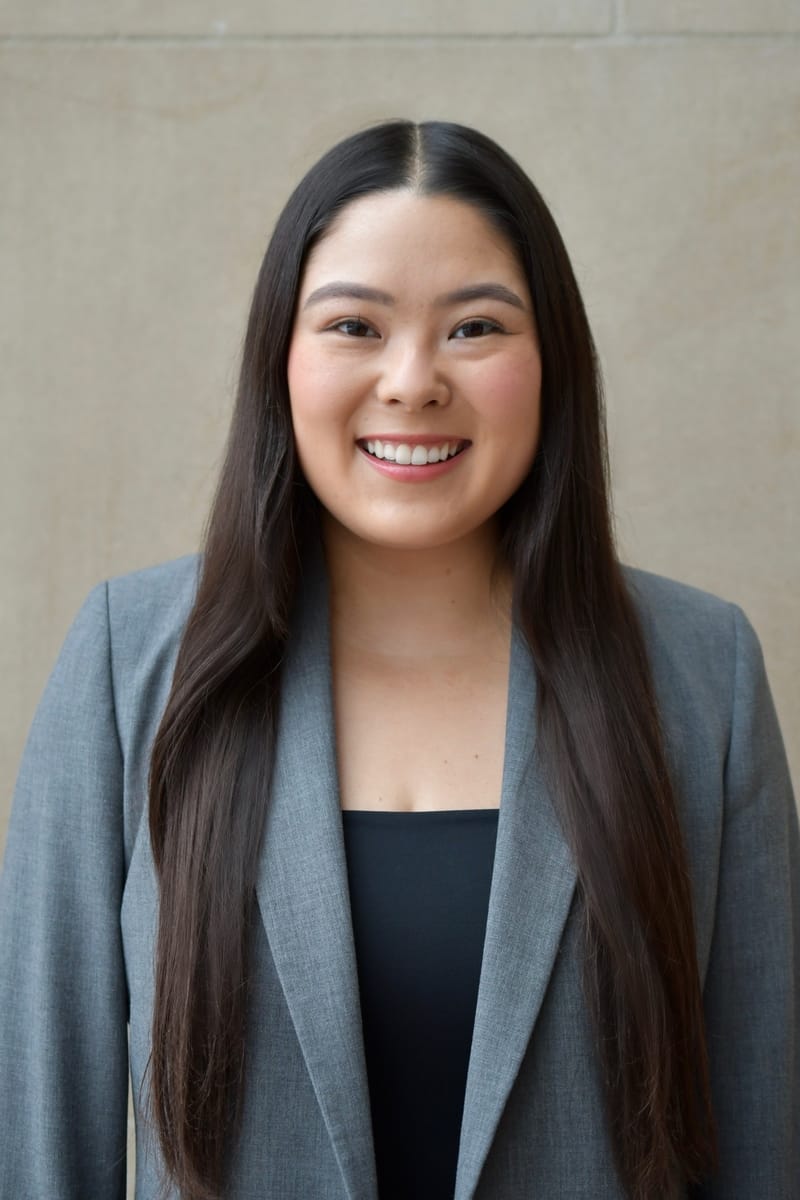

Courtesy of Lancer Photography.
Cheyenne Hunt is an attorney, activist, organizer, strategist and creator. She was one of the first Democratic Gen Z women to run for Congress and served as the executive director of Gen-Z for Change before founding Reckoning Action, an organization created “to confront misogyny and gender bias in American public life.”
She joined Verified Live: Campaigns & Creators on Oct. 15 in Washington, D.C., to discuss her work surfacing allegations against both former Rep. Eric Swalwell and Graham Platner, upending both the California gubernatorial race and the Maine Senate election. This interview has been edited and condensed. You can watch the full conversation here.
This interview has been edited and condensed.
Last week we hosted Verified Live: Campaigns & Creators in Washington, D.C. to discuss how campaigns are using creators and where they have had a tangible impact on the upcoming midterm elections. As a former political campaign reporter, it’s a topic that I am fascinated by, as voters increasingly encounter political messaging on social media.
This space is rapidly developing. In 2024, I broke the news that both conventions were credentialing creators for the first time, and that now feels like ancient history and an expectation for events. But since expanding my coverage this year beyond politics, I’ve also learned how far the political space lags behind much of the greater creator economy. For our first event, we convened speakers from both sides of the aisle to dig into how creators are shaping the political system, this cycle’s creator controversies, and where things are headed going into 2028. Speakers included creators and digital strategists Annie Wu Henry and Merrill Hersam, Federal Election Commissioner acting as Chair Shana M. Broussard, and creator and Reckoning Action founder Cheyenne Hunt.
You can watch all three discussions in full below:
Dylan Wells: Eric Swalwell was the frontrunner in many ways in that gubernatorial primary. He was a former presidential candidate and a party favorite, despite rumors for years of his misconduct. You were contacted by someone asking you to make a video about the congressman's behavior. Eleven days later, several articles were published, namely by CNN and the SF Chronicle, detailing allegations of sexual assault and rape. His campaign quickly unraveled, and he exited that race and later resigned from Congress. He has denied these claims.
I want to talk about how you brought those allegations to light and gathered new information. Why do you feel like creators were necessary in getting that story to really break through in the way it did?
Cheyenne Hunt: This story is interesting, and people want to take a lot of morals from it. And I really want everyone to pump the brakes on what this means about creators and the role that they should play. There was so much nuance that happened here. One thing that we really made sure to do was to avoid breaking any of the details ourselves, of what these survivors were bringing forward, because the trust crisis is real, and we knew that it would be received badly and actually put a lot of these women in danger if we were to start posting some of this stuff without having it go through a real newsroom that could vet these claims independently and do the kind of investigative journalism work that they are resourced to do, trained to do.
But I think that ultimately when I first posted my video about this, this was a unique thing. And I don't ever suggest to anyone else that they do this because it very nearly blew up my career. This was a unique confluence of events that came from my experience working on Capitol Hill, being warned on my second day to stay away from Eric Swalwell, and having that personal experience and then knowing the person who was coming forward, bringing these claims to me, and that by doing so, she herself was putting her career in danger.
All of that was enough for me to know that I had enough to bring this forward in this pivotal moment, as he was taking the lead in this gubernatorial election. And as soon as I did, I started getting phone calls from legacy newsrooms telling me they had been working on breaking this story for 10 years and had not been able to get a critical mass of survivors to come forward at the same time, to be able to break it.
And so what we did in those 11 days was continue to make content withholding key details, but being very clear if this has happened to you or someone you know, we believe you. We have legal resources for you. We have pulled together a fund to support you to get through this, and we want to help you do that and we can protect your identity. And that was something that ultimately led to, I mean, I received well over 50 messages from women who experienced some form of this that matched the pattern, and those were the ones that seemed verifiable. And that's ultimately what blew the door open on this thing.
I think that the creator piece of it is that parasocial relationship; it is that trust. It was the fact that [these women] don't know these reporters. And frankly, we've seen so many horror stories of survivors coming forward to legacy media and being treated more as a source and something to extract. And [women] being left at the end of that process feeling very used to break a headline story versus we really served as kind of an intermediary and an advocate for them throughout that whole process.
DW: Maine was obviously a different situation, but another candidate who had all sorts of stories swirling around him, and you were an early backer and endorser of Graham Platner, and then you rescinded your endorsement. You were one of the first, if not the first to do so, and took on a similar role to the California race of connecting women who were coming forward with media, with attorneys. He also ended up suspending his campaign. That happened soon after this California experience. But what were the major differences in how you thought about that race?
CH: Well, we were a lot more prepared, but this was also a different beast for a lot of different reasons. Graham Platner was incredibly well-liked. He was also incredibly well-defended by people that I had spent years organizing with, arm-in-arm, and I endorsed him — I liked this guy, I liked his platform. But knowing what I knew and speaking to these women, and even beforehand reading the initial New York Times article, that was clear to me, as an attorney who has practiced domestic violence [law]. Even what was written in the media at that point, before I talked to these survivors, was felony domestic violence in all 50 states. And to watch people kind of waffling on that and trying to make it OK was deeply disturbing to me. And so that was a big part of why I rescinded that endorsement at that point. And as soon as I did that, we were contacted by organizers in Maine who said they had women that had a story to tell.
This was a different beast on social media and in the creator economy. Eric Swalwell was well-liked among a certain subset of people who watch cable news, not so much people online. And so people were ready to jump on board. Graham Platner was a totally different thing.
Convincing creators to have these conversations, even when it's about people that we like, when we know that there's a problem and we need to be honest and we need to really raise the bar, even on our own side of the street, was difficult. The backlash that I and my team got for that online and from creators was difficult.
I mean, I had packages of powder sent to my house. I was doxed, people have my address now, like I'm still dealing with the ramifications of that work. And you know, it's the internet. It's a crazy place.
DW: You told me that you yourself are not the kind of creator you're now trying to incubate at Reckoning Action. Break down what you mean by that and this theme we’ve discussed of politics-first creators versus the more culturally coded messengers.
CH: We don't need more of me. Like, I talk about the news all the time. I do overtly political commentary, I'm breaking down the thing that's missing about the headline that you're seeing and giving my opinion, and it's always political.
And also, by the way, that's not necessarily by choice. When I try to do anything else, the algorithm gods are like, no, get back in your lane; no one's going to see that. So that makes it really difficult. What I mean by we don't need more of me is, we need people who are living values-aligned lifestyles.
[Creators on] the right have been so masterful at soft life and like our alternative is like, less of a grind. Like, the “Girlboss era” is oppressive, look at how soft our life is. And we [on the left] need something that's not a hard life. We can't sell hard life, that sucks. No one wants that. Like rise and grind and you can do it all until you have an autoimmune disease — like, ew.
So we're really trying to incubate something that's not that. And just based on the platform I've built, like, I just don't think that's going to be me.

Courtesy of Lancer Photography.
This Q+A is part of Verified, a newsletter that is published by Washington Post Creator, a new business outside The Washington Post’s newsroom that is focused on the creator economy and content partnerships with independent creators. Learn more about Washington Post Creator.
