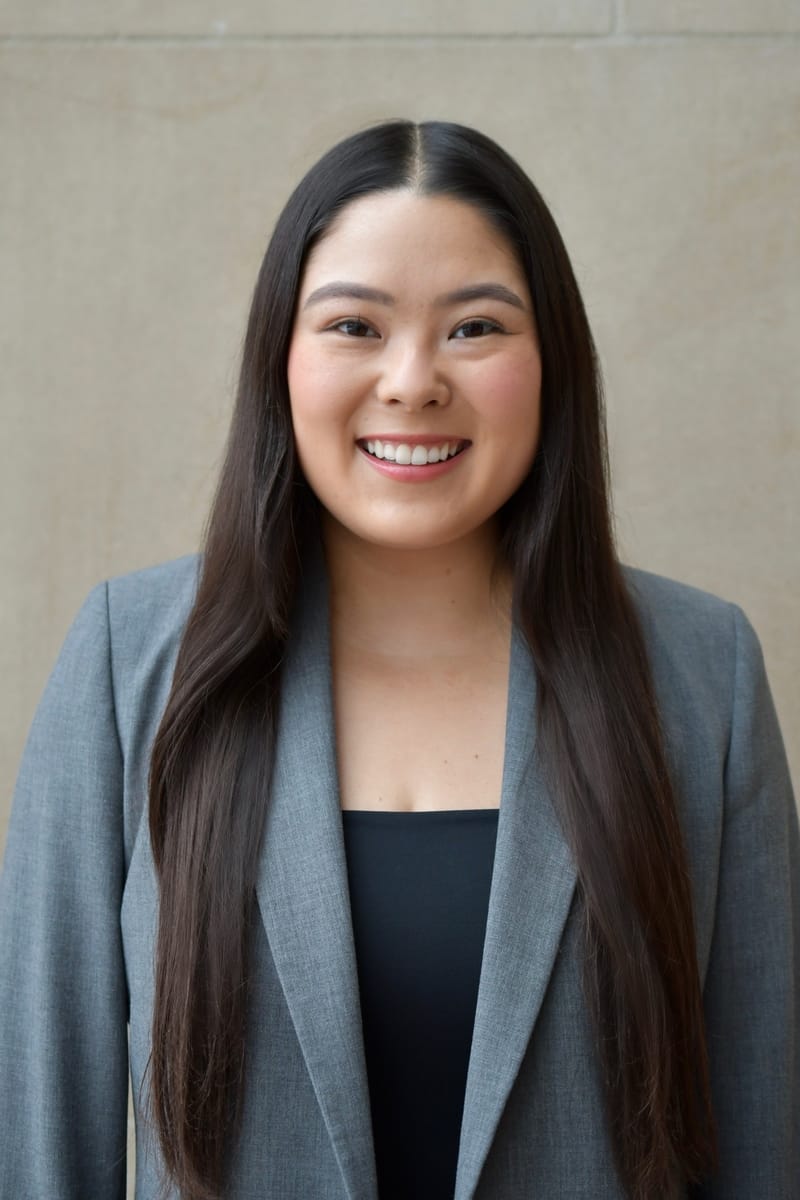

Courtesy of Cleo Abram. Photo by Kendra Siebert.
Cleo Abram is a video journalist who worked at Vox before going independent and launching her hit series “HUGE* If True,” which tackles scientific topics from colossal squids to nuclear fusion for an audience of 7.7 million subscribers on YouTube alone. I spoke with Abram before she participated in a Samsung Solve for Tomorrow and Washington Post Creator event last week.
This interview has been edited and condensed.
Dylan Wells: What goes into an episode of “HUGE* If True”? How do you start conceptualizing it, and what is the timeline between pitch and the final product we see?
Cleo Abram: This is a several-hundred-hour research and production process over the course of several months for every video. We publish one video a month of “HUGE* If True,” [which are] highly produced explainer episodes. The mission of everything that we do, at the end of the day, is how can we take something that people are broadly interested in and is important to the future that we’re all going to be living in, and just explain it in a way that shares with you how it might actually affect your future? Who are the smart people working on this topic? How can I participate in making that future go well?
The key in all of our episodes is [uncovering] that answer in a way that makes people feel like they can participate. So the mission of the show is to show people optimistic futures, because we believe that when they see them, they’ll help build them.
That research process involves hundreds of hours of background interviews with all of the major experts in the field [and] iterating on all the visuals that we’re going to use. We spend at least a month in the preproduction process, figuring out what the story is and how we’re going to tell it. Then we typically do some kind of field shoot. And then, after that, we take all that scripting, which takes several weeks. All of this involves a lot of background and recorded interviews with experts. And then we move into production of the video, and that takes another month, at least, just in the editing and the animation.
On top of that, we're also doing “Huge* Conversations,” which is our interview series. These are conversations with the most important people in science and technology [who] are building the futures that you and I are going to live in, and pulling out from them their vision of what the future is that they want to want — and then asking like, “Okay, how could you prevent this? How could you explore further that, taking into account this or that implication?”
The goal for me is to unpack both the promise and the peril of it actually coming true. That’s what’s interesting. And so that [requires] an incredibly deep understanding on the part of our team when we come into those interviews. It also involves really, really careful visualization. When I was talking to [Nvidia President and CEO] Jensen Huang, for example, you’re trying to distill three decades’ worth of innovation in computer hardware with one of the leading experts in the field running one of the highest-value companies … into something that is digestible for millions of people. Because, at the end of the day, there shouldn’t be anything that affects your life that you can’t understand. Not that you’re going to become a quantum physicist, but you can understand the implications of a quantum computer.
DW: You’re describing a production timeline and team that, traditionally, you have to be at a mainstream, traditional outlet to have. How many people do you have working on your team?
CA: We are a small but mighty team of seven. Twelve million people are subscribed across [our] platforms, and we reach hundreds of millions of people a month.
DW: How much does it cost to produce one episode?
CA: It just depends. The vast majority is the production costs and the cost of our team. We also travel for all of these field shoots, and then we put just an enormous amount of time and effort into them.
DW: What's been the biggest change in how you approach stories since you went independent?
CA: Our show has a distinctly different mission than any other media company I’ve ever seen, which is to present optimistic visions of the future so that people can explore what they think of them.
There’s so much that is missed when you assume that something won’t work, and we spend a lot of time doing that. But without the optimism of exploring a genuinely better future, you don’t get the opportunity to explore all of the things that could go wrong in success.
There was an unbelievably fascinating article in the New York Times, I believe, two months before the Wright brothers took their famous first assisted flight. And it said something like “if it took the animal kingdom thousands of years, it’ll take humans millions.” It really was saying the effort might be employed more profitably elsewhere. Two months later, the Wright brothers took their flight.
So by assuming that it won’t work, you stop the interesting part of the conversation. Maybe you get into the first round of concerns [saying] , “Okay, if it works, then people you know might get hurt if these planes crash.” Yes, that is absolutely true, but you have to have the optimism to imagine the future to say, “Oh my God. What if this changes trade and where kids live compared to their parents? And who moves to the cities?” And all of these things that we’re now seeing, the environmental impacts of airplanes, you couldn’t possibly see that if you didn’t play it out optimistically. And so that is what I’m trying to do. And I think it’s an important function of journalism that isn’t happening enough right now.
DW: There's such a debate in our industry over creators and journalists — if they are one and the same, if they are symbiotic, if they’re competitors. I’m curious where you fall on that continuum because you’ve worked on both ends.
CA: I see myself as both a journalist and a creator. And I think many people are, whether they choose to call themselves that or not. I think most people, when they use those words, are drawing a circle around people that work in large groups at what we call media companies. But I’m not sure why we’re differentiating. I would be much more interested in a differentiation that applies to the skills and the process.
So, for example, I really do want to know what the corrections policies are at both media companies and [for] creators, whether those creators call themselves journalists or not. So it’s less that I think there’s some tension between creators and journalists, or whether I think people should or should not call themselves one or the other. I think it’s totally up to people to identify with these terms. But I think the big question is, in what way are we serving the audience? What is your process? What is your mission? How good are you at doing that?
So when I see creators that don’t want to call themselves journalists but are doing the acts of journalism that I consider journalism, I’m super excited by that. I think they’re serving their audience incredibly well. I would encourage us to look with the same criteria about information excellence and journalistic excellence [in] creating information for people, because it has the same impact on the audience; they often trust it. They want to know that it’s accurate. And then, turning back to journalism, I think any journalist who is making a freelance show or is putting themselves out there in a way that identifies them as an individual, whether or not they want to call themselves a creator, I would encourage them to think about, what are the skills and benefits of doing that.
And again, it’s not about terminology. It’s just about, as you said before, learning from each other.
DW: What do you feel are the biggest skills that stand out to you as things that you have had to lean into more — or found the value more in — now that you're approaching things as an individual face as well?
CA: I think a lot about how to tell great stories in a way that will be memorable for people years after they watch it. I really want to help people contextualize the next 100 headlines that they see about a topic.
I’m trying to make things that last. I’m trying to make things that are, above all, accurate and useful to people and that give them a specific feeling, which is that they are part of making sure that the future goes right. How do you encourage someone to feel that way? You show them what smart people are suggesting for the future, and you encourage them to think critically about which parts [of that future] they like.
The skills that you need to do that are all of the great reporting skills that I learned at media companies and have continued to improve upon since and all of the great storytelling skills that … I see from all kinds of different people. I’m reading a bunch of sci-fi books that I think are really incredible explanations of possible futures in a fiction way, and I’m trying to think about, how do I build that kind of character development, for example, into all my stories? I take inspiration from graphic novels and the way that they use visual cues to make sure that people understand information that you don’t even realize you’re instinctively getting when you just look at something. So there’s a huge amount of storytelling skills that you can bring into your practice once you begin to find the joy and ways to learn from everybody.
It’s above all a team effort. I have this incredible team. I learn from them all the time. I wasn’t managing a team when I was in a media company, and so that, I think, has been, by far, the best day-to-day thing that is true of the show that we’re making now. The people that work on my team are experts in their pieces of the production process. I trust their judgment, and there’s nothing better than a great brainstorm with a great team about how to tell the story.
DW: What do you think are the factors that journalists need to consider before going independent?
CA: The most important thing is to know why you’re doing what you’re doing. What do you have to say? Whether you’re within a media company, whether you’re independent, whether you’re a podcast or a video, whether you are a newsletter, all of those questions come after: What is your mission?
If your mission is to explain optimistic science and tech stories to a wide lay audience, maybe it’s a lot of really in-depth storytelling on YouTube and short-form video, which is what I chose. That’s a strategy for reaching most people at the highest information density, which is video. That’s why I did it that way. But if your goal is to really bring people together in a local community, maybe you’d be better served with in-person events that you curate. There’s so many different factors.
DW: How does it work for you now with monetization? What are the streams of income that support you and your team’s work?
CA: Because we are an incredibly high-quality explainer show, we also work with partners to explain the technology that they’re working on in this very, very highly produced, very beautiful [manner]. So we did a partnership with Nike, for example, where we visually took apart one of the shoes and explained how the technology works; and that’s clearly marked as a sponsorship, but it’s beautiful. It’s a lot of fun to watch. It’s made in our style. We can do it very quickly, and we make them in the way that we know how, based on hundreds of incredible, highly performing videos that we made. That’s what I would call a sponsorship.
In that case, that was a series of shorts, but we also do integrations into our long-form videos. They’re clearly marked sections that are distinct from our editorial journalism, but they are really fun explainer moments. We did a partnership with Microsoft, for example, when we went to LIGO, the gravitational wave detector. And there was a section where, using Microsoft devices and software, I’m explaining why LIGO had a problem with ravens. They were picking on the pipe, and it was causing ripples. And so the massive science project of gravitational waves was getting messed up by these, like, thirsty ravens.
But [within] that little section, I can demonstrate how to use Microsoft products in a way that they like, while at the same time making something that millions of people want to watch. That’s why they come to us, and that’s our whole business. We don’t have any other revenue streams; we are exclusively sponsorship-based.
DW: Do you think audiences have changed what they expect with that kind of sponsored content? There’s a view in some parts of traditional media that if you have Microsoft’s name involved in that way, it’s not objective.
CA: I don’t think that’s how media works. I think Vox was doing editorial sponsorships when I was working there, and the delineation is, Is this marked as an ad? And so, if you look back at the way that media companies deal with editorial sponsorships, the way that they deal with branded content, everybody’s got different ways of dealing with that, and every company has to reckon with those things, but the main theme is that it needs to be clearly marked, and the audience always needs to know exactly what’s in an ad and what is not.
I would say that the main things that I care about are, does the audience know that this is an ad? Is it clearly marked as an ad? Firstly, that’s a legal requirement. But you know, some people are trying to downplay it versus making it really clear. Ours are very clear. Also something that’s important to me, especially when you put something into a high-trust environment, is everything that you say in the ad needs to be — and this will sound so simple — true.
For example, I don’t drink alcohol [and] I have no objection to alcohol. This is a made-up advertiser, but if [a] wine of the month club came to me and said, “We’d love to do a sponsorship with you,” I would not say, “I love wine of the month.” I would say, “My mom is a real connoisseur. And gave this to her as a gift. It’s a great Mother's Day gift, because she says it’s great.” And I would ask her if she says it’s great. But I think it’s really important for clear demarcation and truthfulness in everything that you do.
And I think, at the top of every media company, there is a set of individuals thinking about the exact same questions as every creator, and they come to different decisions about it. And, if you look at the policies of media companies, you’ll see different decisions. Everyone’s trying to grapple with the same thing when you’re making journalism.
DW: Who do you watch for inspiration?
CA: So many people in so many different fields. I mean, some of these people are journalists. I would just say, off the top of my head, Derek Thompson is independent now and is doing unbelievably great work. Johnny and Iz Harris are running a production company called Newpress that is unbelievably great. They have several creators that are working with them that are just stunningly talented.
I look at a lot of my friends and colleagues and see the way that they’re doing things, and … think about how it might be an inspiration to me, [even] though the format is really different. Michelle Khare makes a show called “Challenge Accepted.” It’s unbelievably [well] produced. When she goes out into the field, I like to watch her production process. It’s just so incredibly inspiring. Same thing with Mark Rober.
So I try and learn a lot from these friends of mine that I'm looking up to, [and who] just really know how to put something together in the field in a way that I aspire to learn. And then I also draw a lot from other formats. I’m reading right now Ted Chiang’s book, because I'm really interested in how science journalism can learn from science fiction.
DW: Is there a smaller creator you think deserves more followers?
CA: He is a very well established journalist, but Max Fisher just launched his new show with Johnny and Iz, and it’s incredible. It’s very, very good news. I think Ben Rein does a bunch of videos on neuroscience in a way that I think are just really, really excellent. My friend Cory Popp just started a YouTube channel where he does really deep investigations, and I think they’re excellent.
This Q+A is part of Verified, a newsletter that is published by Washington Post Creator, a new business outside The Washington Post’s newsroom that is focused on the creator economy and content partnerships with independent creators. Learn more about Washington Post Creator.

Advertisement

Samsung Solve for Tomorrow is an annual competition that tackles the tech-education gap by equipping grades 6-12 classrooms with the technology, training, and mentorship needed to apply STEM (science, technology, engineering, math) skills to real-world issues in their communities. Over the years, it has become a force for reshaping the perception of STEM as a vital field for fostering a skilled workforce and informed citizens of tomorrow. Collectively, Samsung has awarded more than $29 million in technology and classroom resources to public schools in all 50 states. Learn more about this year’s recipients here.
