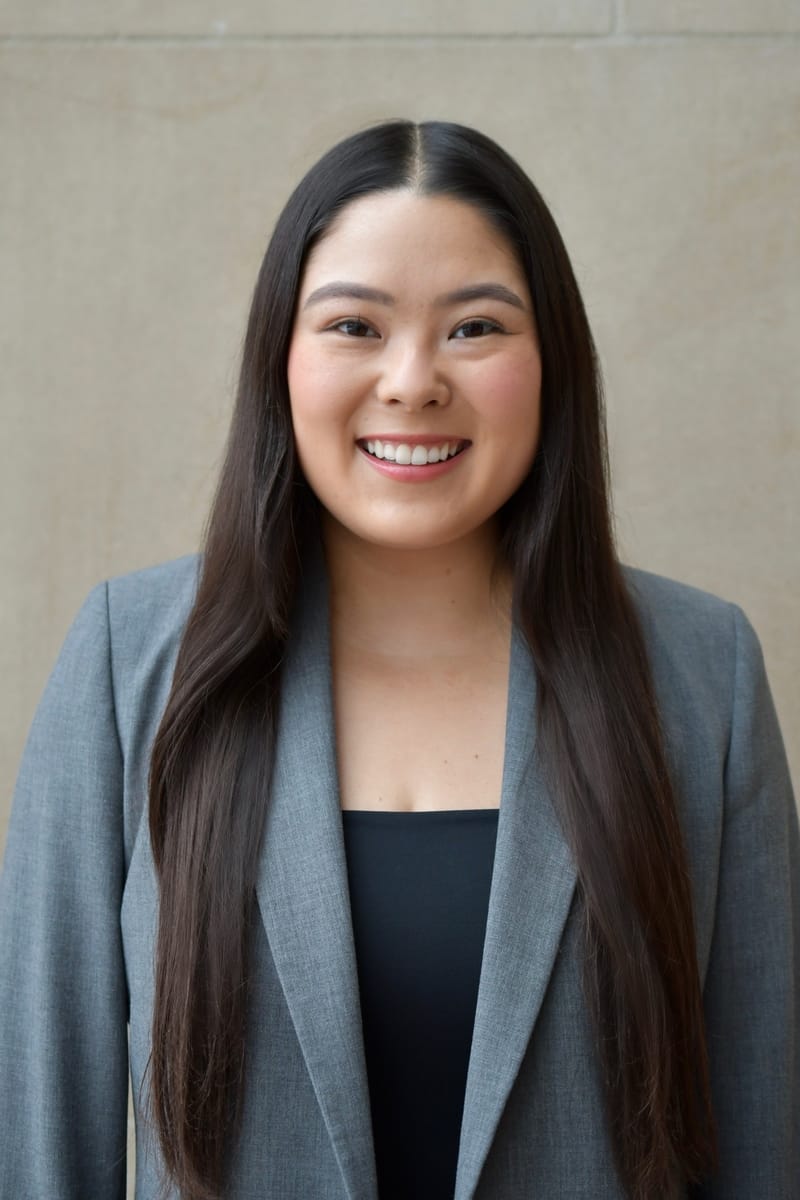

Courtesy of Spotify.
Mina Le is a fashion and culture creator who writes the Substack High Brow and is known for her commentary videos. She recently was named one of Variety’s 10 creators to watch and is preparing to launch a new video podcast. I spoke with Le last week at “On Air, In Style: An Evening with Spotify,” a creator event focused on the overlap between fashion and podcasting in advance of the Met Gala.
This interview has been edited and condensed.
Dylan Wells: When did you first realize that you could be a creator as a full-time gig?
Mina Le: It came about organically, something that I’m always so grateful for when I look back. I started [on] YouTube during the pandemic, and it was just something that I did for fun. I talked about costume design in videos, and I didn’t really think of it as being a career. It was just something to do because I couldn’t literally do anything.
And then it was just one of those moments that was like kismet, when I made a video about Disney princess costumes, and it just completely blew up overnight. I got thousands of subscribers all in one go. I was able to monetize pretty quickly after that, and because I didn’t have a job at the time, I was like, I’m just gonna run with this. And it’s been six years.
I always wanted to work in fashion. Prior to when I made that video, I was doing these styling internships in New York. I was basically a clothing mule, running around with garment bags all over the city, just trying to figure out how I was going to get into the industry. And so it wasn’t like above my conception of something that I wanted to do, but I definitely didn’t realize there were other pathways to go about it. I’m just so so grateful.
DW: There’s clearly so much research that goes into your videos. How do you first come up with the idea and decide — whether it’s about blondes after “Love Story” or clean girl aesthetic or everyone being Chinese — the kind of inflection point of a trend that reaches the level you want to make commentary about?
ML: I just try to be well-read. That’s a necessity if you’re a creator in this field, because so much of our work is also centered around trends, or at least knowing what trends are happening. And so I read. I read The Washington Post, all these other news columns, and I keep up with the cycle of what is airing, so “Love Story,” like you mentioned, just to keep hip with the times. And then I try to come up with a way to go about it that is interesting and thought-provoking, because I feel like, at the same time, there’s also just so much commentary happening all the time that I really think about what it is that I can do, and what I can bring to this topic that [wasn’t] covered before.
DW: What does your research process look like?
ML: In the last year, I hired a research assistant to help me because it was getting to be so much. But, essentially, I think about a topic — like “Love Story,” I’ll literally read every single article about it that’s published by a reputable source. I’ll see what is happening and then follow threads in terms of the blondeness of it all.
One of the things that I kept seeing was just how everyone wanted to copy [Carolyn Bessette Kennedy’s] style, and so I thought, how are we gonna break down the style? And I mean, you start with the head, so I didn’t make it that far down. But then I was like okay, blonde. What about blonde? Constantly asking questions every step of the way is, I think, the best way to do research.
DW: Are you still editing your own videos? Or have you brought on a team at this point?
ML: I have a team of one other person who is amazing. She has edited my videos for the last couple years, and she’s really created a style that I think is true to my own aesthetic eye, but also something that is very much hers.
DW: What have you learned in terms of what kind of fashion content connects with people, and what your audience enjoys? Are there any things that have really worked or have not worked at all?
ML: I think people like to see themselves in a lot of the fashion conversation. And I’ve noticed that with some topics that are a little bit more avant garde or like haute couture, it’s a very specific demographic of people who are really, really interested in fashion, and they are awesome. But I’ve noticed the topics that really resonate with a lot of people are understandably topics that people have been thinking about for a while, like, “How do I dress for work, and how does that affect me?” And I think, in a way, those videos end up being more rewarding, because the kind of dialogue that happens in the comments section is always so varied. It brings me [an] awareness of the range of experiences that everyone has on the other side of the screen.
DW: Where do you look for fashion inspo?
ML: I still look for movies when it comes to my own personal style. It’s something that I’ve always looked at when I started dressing. But, in terms of actual knowledge, I love podcasts and video essays. “Articles of Interest” by Avery Trufelman is a really popular one that I think is so, so important to understanding where clothes come from. She goes through [her subject with] such a historical lens that I really appreciate. Recho Omondi’s “Cutting Room Floor,” obviously, is another one that is more about the current industry — and, I think, also important for someone who wants to work in fashion but just doesn’t know where to start.
DW: What is a trend you think is interesting currently, or are thinking about unpacking for your audience?
ML: I think something really interesting right now is the sort of whimsical trend that we’ve seen, like large buttons. I think Emma Chamberlain just released a West Elm collection with tons of buttons. So we’re seeing that also relate to interior design. But, yeah, large buttons, prize ribbons [and] oversized clothing.
DW: What creators do you like watching the most right now?
ML: I do really like, I think his name is Dylan Kelly, the one who is like, “Let me tell you about fashion.” I think his way of distilling information is so impressive because it’s like one take — or at least that’s what it looks like. He compresses so much information. Another fashion creator I’ve always loved is Luke Meagher from HauteLeMode. He’s someone that I watched before I even started making my own stuff, and so it’s great to see how his career has also kept rising.
My friend Mickey Galvin actually is someone who I met in an acting class, but she started doing these video essays on YouTube about technology and about artistic process, and they're done so well. They’re completely recorded through a Mac Photo Booth screen. And so it also kind of shows [that] you don’t need the high-intensity DSLR, the really fancy sound equipment, to make something really cool and interesting.

Courtesy of Spotify.
This Q+A is part of Verified, a newsletter that is published by Washington Post Creator, a new business outside The Washington Post’s newsroom that is focused on the creator economy and content partnerships with independent creators. Learn more about Washington Post Creator.
