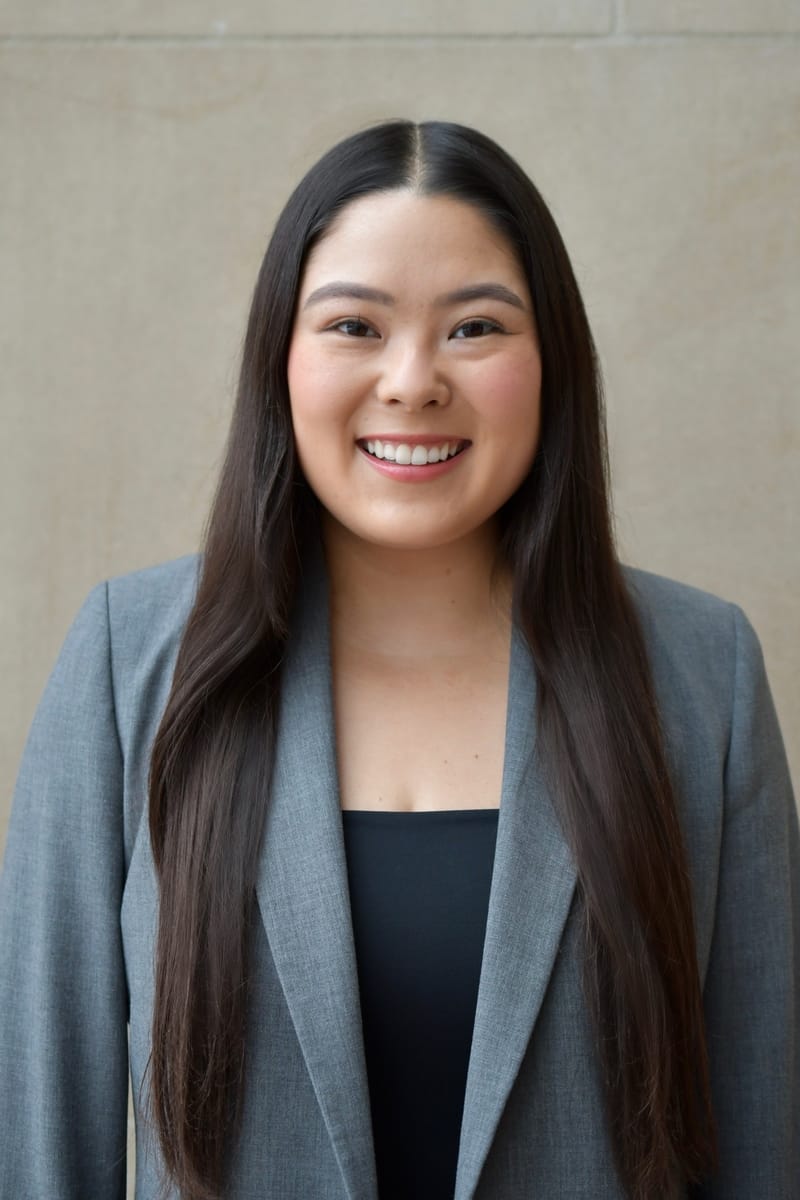

Courtesy of Rachel Samples.
Rachel Samples is a Los Angeles-based comedian and creator. Before going full-time as a creator, she worked in the industry as a creative director. This interview has been edited and condensed.
Dylan Wells: You have an untraditional path into the creator space — tell me about your origin story and the transition from the corporate world to becoming a creator.
Rachel Samples: I was always that kid who was making sketches and bits with the camcorder and doing videos with friends.
I went to school for TV and film, and was doing some sketches, improv there. I loved it so much, but definitely was fed this sort of path of corporate, the corporate journey. I got to LA and started at an agency that was actually focused on branded content and campaigns for creators. So this was like my bread and butter in my nine-to-five, and then I was still having these little blips, especially in the pandemic, of making sketches, flexing characters and doing things, but it was always this back burner to the back burner.
Then, like many people in 2020, you have that one video that just tears off. You have this internal awakening of like, “Wait, wait. Do I need to be more consistent and take this more seriously?”
So from that moment, it was May 2021, I really focused on consistency. TikTok loves when you hit that joke again, again, again. And trying to understand, like, what do I enjoy doing? What am I able to do in between work calls for 15 minutes? What can I quickly execute myself? And then it got to this point in the summer of 2023 [clients] were like, “I love your videos.” And that was such a shiny thing for the agency I worked for, our “in-house creator who's pitching you.”
I left my full-time ad-agency job in summer of 2023 with the hope of doing content full time. I've not looked back since, and I'm just unbelievably happy. It's a ride, for sure, but I'm so happy I took that leap. I've never, ever regretted it.
DW: I'm so fascinated by how you balanced that overlap of working with both brands and creators while also becoming a creator — there's a lot of overlap that I imagine was a bit hard to navigate.
RS: Yeah, there were definitely moments where there was this complementary, almost synergistic, relationship where I was learning insights and best practices and platform updates and things like that at work, and then translating into my own. But then there would be opportunities where I was like, “Oh, this is a funny creative bit that I was like, damn, should I have saved that for myself?”
DW: One thing you mentioned earlier that I think is interesting is that TikTok loves when you repeat a joke. Comedy itself is one thing, but comedy for these social platforms and their algorithms is also different. What have you learned about what works?
RS: Algorithmically, you're going to get rewarded for hitting that joke again and again and again. But you personally, from a creative and soul standpoint, will wither and you'll want something to mix it up. The two things I see that really make a difference in terms of growth, performance, engagement, and personal fulfillment are anything that feels character-driven and episodic.
I've done a series with just women, right? We're playing heightened characters of ourselves. But you know what the game is: It feels like something repeatable. Aliki – @alikicomedy – and I do a series together [playing a] mom and dad, mom and dad going to Target, mom and dad going to Home Depot. Seeing these faces and characters and knowing we can keep hitting the same thing again, but it feels fresh and new to us every time, I think that really makes a big difference.
The second bucket is having a really smart take on something timely in pop culture. I remember I did this video when Will Smith slapped Chris Rock at the Oscars. I did a bit as the DJ at the Oscars after party, playing Will Smith's “Welcome to Miami” and vibing, and then acting like I was interrupted, and being like, “What's up, what's up? Oh,” and cutting the music. That took off because it's obviously in the moment, in the conversation, on social.
DW: What do you think people need to know if they have started this more as a side hustle and are debating going from a more traditional career into being a creator?
RS: For me, I sort of assigned myself a number for follower count, just the size of your platform. I made a little three-month roadmap of what I ideally needed to save, what I wanted to happen, the different ways it could go. And then, it's really just committing to that consistency.
DW: What are those monetization channels for you? How are you able to do this as a career now?
RS: The biggest thing for me is branded content, so a brand or an agency coming to me directly and saying, “We have this campaign we'd love for you to create a sketch.” Throughout my time doing videos for the past five years, there's monetization opportunities with TikTok, Reels had a bonus thing for a bit, and Facebook oddly enough, right now, is one of the highest paying for a creator page. But all of those are just so hot and cold, and sometimes happening and sometimes not.
The biggest opportunity truly is committing to those relationships. I feel like a grandma in the affiliate link space, but I'm trying. I just did a ShopMy.
DW: Who are some of your favorite creators to watch right now?
RS: Someone who I think is so funny, his name is Evan Mulrooney, @roondawg_firstofhisname. He is, I truly think, probably the next Will Ferrell-esque, just big dude, funny, so, so funny.
@goldentrashbagg, her name is Gabrielle Kennedy. She has this series called “Falling in Love,” where it's hidden camera; she falls in the streets of New York City to see if a guy will help. I followed a while ago and then to see this series take off is so great. I'm obsessed with the character my friend Nicole Daniels – @nicoleolive – does, a woman who works in a craft store. It's a series that's so funny.
This Q+A is part of Verified, a newsletter that is published by Washington Post Creator, a new business outside The Washington Post’s newsroom that is focused on the creator economy and content partnerships with independent creators. Learn more about Washington Post Creator.
