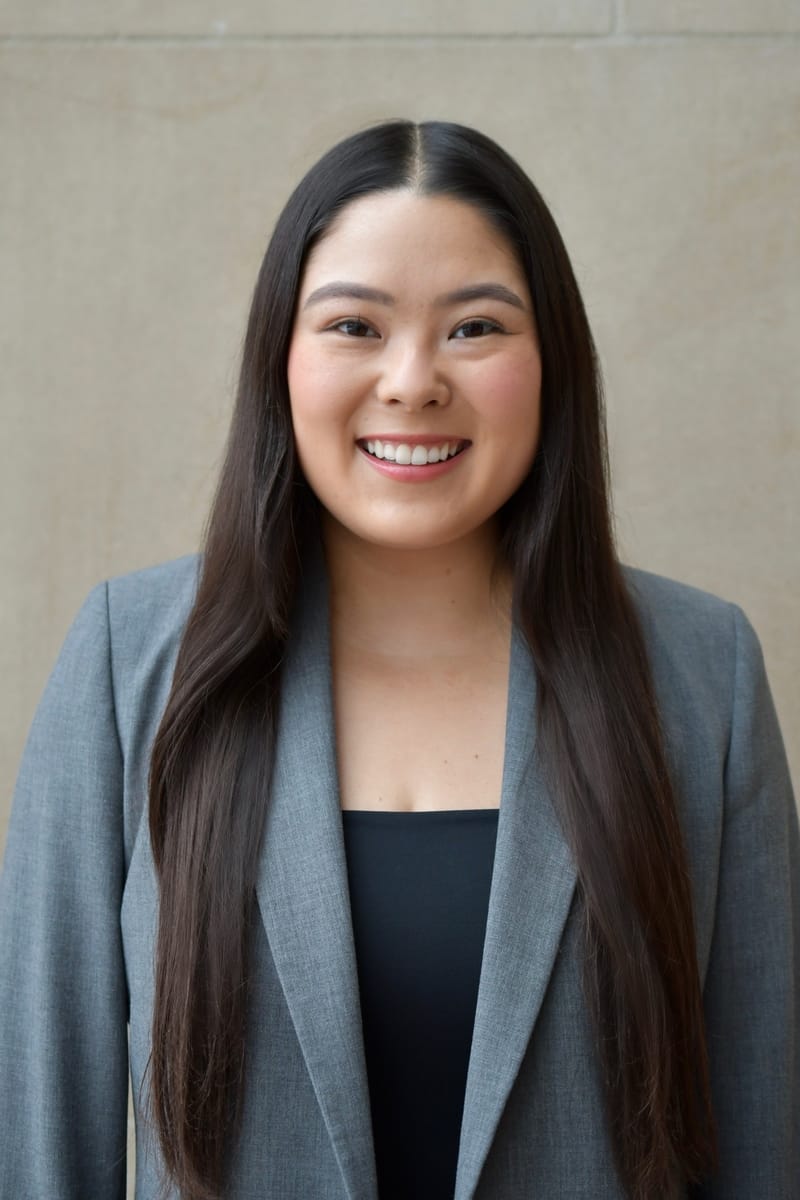

Courtesy of Female Quotient
Last week I moderated a conversation for the Female Quotient at Advertising Week with four creators about what makes for the best brand partnerships. The panelists — E! Host Erin Lim Rhodes, Mary & Pip founder and CEO Mary Holland Nader, author and Rewired Talent Management founder Jason Tartick and lifestyle creator Madi Webb — had great perspectives and I wanted to share with you some of the highlights of the conversation, which can be viewed in full here.
Dylan Wells: Brands are often reluctant to give up control, but doing so often leads to the best creator partnerships. Maddi, where do you think that briefing should end and allow creators to innovate and show their ideas?
Maddi Webb: What is the goal of this partnership? That is a huge question that I love to ask brands. … It's so funny when brands email me, “We want your authentic voice. We want you to be creative. And also put all 50 of these points in, and make sure it's 45 seconds, and add the product in the first three seconds, and also don't make any jokes.” If I know the goal, I can tailor it to what you're looking for. But I've worked with a lot of brands where I get the brief, I think I did an amazing job, I'm really proud of the ad, and they're like, "Oh, we were looking for something a little bit different.” And I'm like, I would love for that to be communicated, so that I can do my job. I want to make the brand happy. I want to be the easiest and best partner to work with, and I can only do that if I really understand what the goal is.
And also, long-term partnerships. If the goal is ROI, you can't expect me to post it one time on my feed and sell out your product. That's just simply not the land that we live in on the internet anymore. People don't want to be influenced. And what's the statistic? People have to see a product seven times before they even consider buying it, but you're expecting me to post one video and sell out?
DW: Jason, what about you?
Jason Tartick: On the long-term partnerships, you will get so much bang for your buck per item that you're putting in a contract because an influencer will take [on the] identity of that partnership, they will speak to it on podcasts, they will be saying that I'm with you for the long haul. You're going to get so much more bang for your buck on long-term partnerships.
I always start the conversation. My manager calls me. I will say, "Who is the agency, or is it brand direct?” Because a lot of things from brand to actual creator get lost in translation based on the agency, and specifically which agency. And the other thing I'll want to know is exactly what they're trying to achieve. Because if it’s shares, if it's comments, if it's likes, if it's follows, the whole creative is going to be night and day of what we're going to do and why we're going to do it, and getting that information is super helpful.
DW: Mary, what do you look for in that brief?
Mary Holland Nader: I think that the brand guidelines should end with a kickoff call. I completely understand that there are must-nots, especially in regulated industries. Like I'm running a regulated industry, and you have to say what you can't say, and this is the program we're trying to promote, this is what you need to say. But once you give the brief to that creator, you're trusting them and taking a chance on their creativity, and you should treat them like an extension of your marketing team.
And if it doesn't perform, that's data. How they communicate your brand guidelines, that's data for you, and so now you know that type of content doesn't work with our consumer.
I think that where I get the most frustration and where I know a lot of my content creator friends get the most frustration, is when they do exactly as the brief says. They don't say anything they're not supposed to say, they do the hashtags right, they do everything right. But then the brand is going back and forth 100 times, like, "Ooh, just slightly tweak this. Can you refilm this?” It's like, I was in a different outfit in the first half of the video, changed in the second half of the video. So I think that it should stop with the kickoff call, and you should be extremely clear from the beginning, and then you just let them cook.
DW: Erin, where do you land on where the brand should have an influence and where they should take a step back from the creator?
Erin Lim Rhodes: I personally love guardrails. I think a brand should provide that clear, direct message. They have to know what is successful for them, but also again the trust, the ability, the permission [for creators] to have that creativity.
But also for brands, when you do give us the freedom and the permission, which we love so much, make sure that there is a very important trusted person signing off on what goes to air, goes to your masses, because we've all seen the Good Good ad. We don't have to get into it, if you're a part of Callaway or Good Good, no offense, but there should have been more of us in the room, more women in the room who were signing off on what was going out. Because when you don't have representation in the room when it comes to your brand guidelines or what you're looking for in the finished product, you have a massive flub, and you just lost an audience you were trying to achieve.
DW: What is one thing you think should be retired from these partnerships? Whether that is a metric or a particular expectation you are just sick of and want to see gone?
JT: One line: “This is a first-time go, but there's gonna be budget down the road.” The dangling carrot. I think creators are too smart right now. We're just like, all right, we're not. We're not playing that game. Like you're in now or you're not. And I think that's been a tool used by a lot of brands as beta testing to to get us hungry. But I don't think it's working as much.
ELR: The idea that you have to exclusively work with these massive influencers to garner that audience or the views or whatever it is you're trying to achieve. I mean, I think it's great if you can, and of course, it speaks to your cachet and the budget, you let us know you spent so much money to work with the biggest creator on earth. But I think we've seen recently that micro influencers are actually so much more impactful, especially when they're talking to a niche audience, whereas maybe they can push the sales or they can push whatever it is that you're wanting to get out there versus maybe a very huge musician that isn't really tapped in to your demo.
MHN: I understand why it exists, you have to justify your ad spend, but the 24-hour metric situation. Most of my videos don't pop off until weeks later — now the algorithm goes crazy. I see videos on my feed that are from two weeks ago, and some of my videos don't pick up traction until literally weeks and months later, so that speaks to it doesn't matter about the 24 hours. Sometimes I'm like I promise it's gonna do better, but I just never know.
MW: I agree with all of them, specifically one-off partnerships. I've really tried to move away from one-offs and more towards long-term. It just builds trust with my audience, and I know that I can offer so much more to the brand that way. And I think this is situational, but the brand trying to do the creative and not letting the creator be the creator of the creative.

Courtesy of Female Quotient
This Q+A is part of Verified, a newsletter that is published by Washington Post Creator, a new business outside The Washington Post’s newsroom that is focused on the creator economy and content partnerships with independent creators. Learn more about Washington Post Creator.
