

Courtesy of Jessica Bippen
This article is from "One Small Change" by Jess Bippen, a registered dietician and Featured Voice, The Washington Post’s platform highlighting content from independent creators.
If you find yourself hungry shortly after eating or crashing hard in the afternoon, it often has less to do with how much you ate and more to do with how your plate was built.
When you eat carb-forward meals without enough protein, fat, or fiber to slow down digestion, glucose enters your bloodstream quickly. Your body responds with a surge of insulin to bring it back down and often overcorrects, dropping your blood sugar lower than where it started. That rapid plunge is what leaves you feeling fatigued, foggy, and reaching for an afternoon pick-me-up.
The fix isn't eliminating carbs or eating bland, restrictive meals. It simply comes down to a four-part formula that anchors your energy:
Protein: Keeps you full longer and slows how quickly glucose enters your bloodstream. Aim for 25 to 30 grams per meal.
Starchy Carbohydrates: Opt for fiber-rich choices so the glucose release is gradual rather than immediate.
Vegetables or Fruit: Fills most of the plate to add fiber, volume, and essential nutrients that buffer the blood sugar response.
Healthy Fat: Delays gastric emptying to keep food moving slowly through your system, maintaining steady energy and satiety.
By ensuring all four components show up together, your blood sugar rises gradually and holds steady instead of spiking and crashing. This Sesame-Glazed Salmon Rice Bowl is a prime example of the formula in action—combining protein-rich salmon, sriracha Greek yogurt, jasmine rice, and fiber-packed marinated cucumbers.
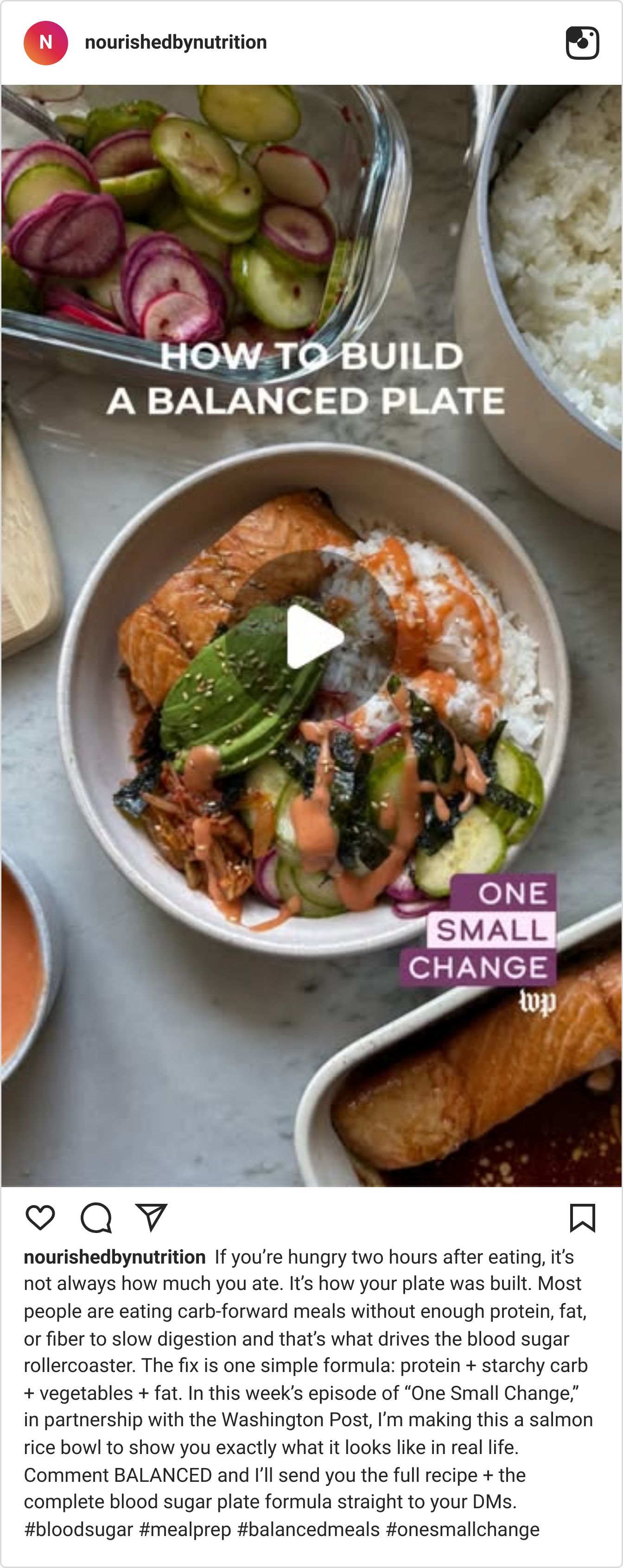
Sesame-Glazed Salmon and Rice Bowls
Active time: 20 minutes | Total time: 50 minutes
Yield: 2 servings
This vibrant bowl features tender baked salmon, crisp pickled vegetables, and a spicy sriracha yogurt sauce. The balance of lean protein, healthy fats, and fiber-rich cucumber keeps your blood sugar steady for hours.
Ingredients:
For the salmon:
¼ cup tamari sauce
2 tablespoons honey
2 tablespoons rice wine vinegar
1 tablespoon toasted sesame oil
2 (6-ounce) salmon fillets
For the quick-pickled vegetables:
1 English cucumber, thinly sliced
2 to 4 radishes, thinly sliced
2 tablespoons rice wine vinegar
1 tablespoon tamari sauce
1 teaspoon red pepper chili flakes
For assembly:
1 cup cooked jasmine rice
½ cup plain Greek yogurt
⅓ cup sriracha
½ medium avocado, sliced
2 tablespoons toasted sesame seeds
Directions:
Marinate the salmon: In a small bowl, whisk together the tamari, honey, rice wine vinegar, and sesame oil. Place the salmon fillets in a shallow bowl or dish, pour the marinade over top, and turn to coat. Cover and refrigerate for at least 30 minutes (or up to overnight).
Pickle the vegetables: In a medium bowl, toss the sliced cucumber and radishes with the rice wine vinegar, tamari, and chili flakes. Set aside to marinate at room temperature while the salmon rests.
Bake the salmon: Position a rack in the middle of the oven and preheat to 400°F. Line a baking sheet with parchment paper. Arrange the salmon fillets on the sheet in a single layer and bake for 8 minutes, until the sauce begins to caramelize and the fish is opaque. Switch the oven to broil for 1 to 2 minutes to crisp the edges.
Mix the sauce: In a small bowl, stir together the Greek yogurt and sriracha until smooth.
Assemble: Divide the cooked jasmine rice between two bowls. Top each with a salmon fillet, sliced avocado, and the quick-pickled cucumbers and radishes. Drizzle generously with the sriracha yogurt sauce and garnish with sesame seeds.
Macros (per serving): 640 kcal, 46g fat, 48g carbs, 5g protein, 18g fiber, 30g sugar
For a deeper dive into blood-sugar science, exclusive recipes, and weekly meal planning ideas, subscribe to Jess’s newsletter on Substack and follow along for step-by-step video reels on Instagram.

This story is part of Featured Voices by Washington Post Creator, a team outside The Washington Post’s newsroom. Featured Voices highlights content from our network of independent creator who share their expertise, perspective and stories with The Washington Post.
