
Hello and welcome back to Verified! What should we be covering? Drop us a line by replying to this email, or follow me at @dylanewells.


Illustration by Annelise Capossela/For The Washington Post; iStock
Creators brace for tax season
Salary Transparent Street founder and host Hannah Williams described building her company from viral videos about pay transparency into a full-blown business as “trial by fire” and a series of “horror nightmare situations.”
But the most frightening part of building a creator business? Tax season.
“I was terrified every month that the IRS was going to call and show up at my door,” Williams told me in an interview this week. “I would get partnerships that were worth my annual salary and just be freaking out. I was actually really scared to spend, because I didn’t want to be in a position where we were delinquent [in paying out taxes].”
Ahead of the April 15 filing deadline, creators have taken to social media to share their shock at the amount they owe in taxes. Filing taxes can be extra complicated for creators given their nontraditional streams of income and wide array of potential deductions. The challenge is emblematic of the broader structural hurdles for those looking to navigate the economy as a new class of small-business owners: A quarter of creators cited taxes as their top business stressor, and nearly the same number said they had made tax mistakes that cost them, according to an H&R Block survey.
Some creators “maybe didn’t even intend to become a small-business owner. They just wanted to make some awesome content, or do something fun and cool, and then next thing they know, they’re a small-business owner and [facing] everything that comes along with that,” said Andy Phillips, the vice president of the Tax Institute at H&R Block. Sensing both the confusion and the economic opportunity of the creator economy, which is valued at over $250 billion, the company launched a “Creator Suite” to help creators file and also hosted a creator summit this year.
For Williams, even opening a bank account proved difficult, she said, recalling how bank officials questioned if she was a CPA or gambler when she tried to explain how she was making money by creating financial content online. Her TikTok account now boasts more than 1.5 million followers, but Williams said the growth was hard to keep up with and that hidden costs, such as health care, insurance and taxes, quickly added up.
“We were making so much that the state of Virginia, where we were incorporated at the time, needed us to file monthly taxes,” she said. For her, Salary Transparency Street’s acquisition by NowThis earlier this year has been a godsend that has helped alleviate some of the negative side of the account’s financial success, including losing sight of her original mission, cruel comments and burnout.
Williams said her company made approximately $1.4 million in gross revenue last year. In past years she paid herself a salary of $150,000, receiving less than $100,000 in take-home pay after taxes and maxing out her 401(k). Despite being part of what she referred to as “the 1 percent” of high-earning creators, she cautioned that based on her salary research, the creator space is made up of “a lot of loud outliers and really quiet averages” — and it’s hard for the majority of creators to make substantial income from creating content.
The shock of a high tax bill isn’t limited to big earners either. It can hit particularly hard for smaller or newer accounts who may not be aware of the challenges of filing as a creator or have actual cash on hand to account for an unexpected bill.
Creator Q+A

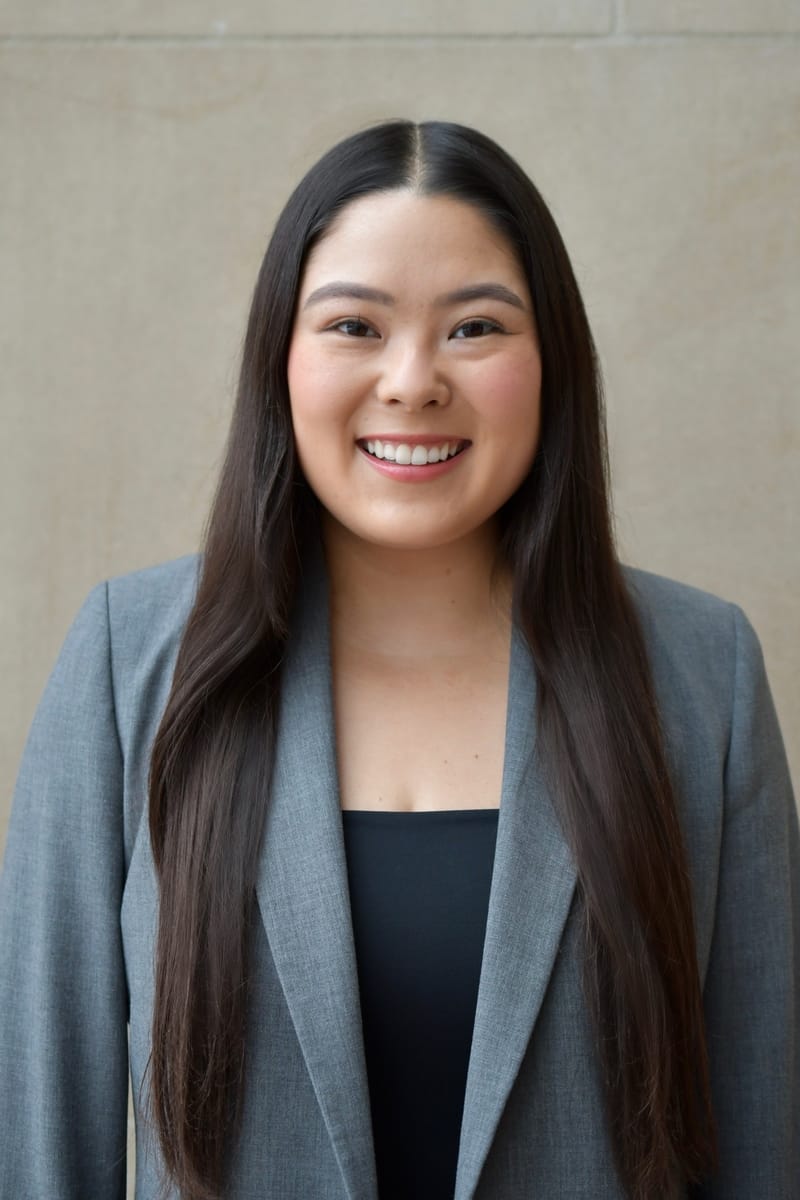
Courtesy of Rachel in a real way
Rachel in a real way is known for her content about navigating the workplace, which she shares with her 125,000 TikTok followers. She graduated from the University of Pennsylvania and worked at Goldman Sachs in equity research before starting her current job in tech and beginning to create content. Rachel shared with Verified how she approaches her social media accounts like a business.
This interview has been edited and condensed.
Dylan Wells: You started posting in June 2024. When did you notice you were starting to get traction?
Rachel in a real way: I took it seriously from the start. The first year, every single day, up until July 4, 2025, I posted between three and six videos a day. It’s a commitment. If I’d started in 2020, it would be a different conversation. But [in 2024] you’re coming into something that’s so saturated. And I think you really have to treat it like a business.
There’s a certain volume and absolute churn. You have to force yourself, kind of, into people’s feeds. It’s challenging on a personal side. If you’re not getting the benefits of it — like events, partnerships, interesting opportunities, talking to people — I think it’s more work than it’s worth.
I walk to the subway. It’s about a 10-minute walk. I’ll read the news as I’m getting ready. I'll usually take something from that, and then I’ll edit it on the subway. And then, if there’s a second article I can read on the subway, between the subway and the office, I would record that. Some days I remember I would walk to get drinks with friends, and I’d be like, I need to just stand for five minutes and do this. I’d set a goal for myself that I needed to hit 100,000 followers in a year. And I did. And after that, it felt like this weight was lifted, because I was like, okay, this is legit. I’ve proven I can grow.
DW: When did you start seeing any financial benefit to that work?
R: The first financial benefit I got was not having to pay for workout classes, which are $40 a class. I was like, I have a great job. I have a great salary [but] I cannot afford to go to these classes. If all I can get is workout classes comped, that would be great. And I think that started late summer [2024].
Some of my absolute favorite partnerships are [companies] I reached out to when I had 10,000 followers. I’ve continued to work with them, and the terms haven’t changed. I’m incredibly loyal to those brands that worked with me then, who believed in me and saw the potential. And honestly, from their perspective, it was an incredible investment. Because I was growing 1,000 followers a week.
I think my first partnership was [that] August. I'll never forget, I got the email and it was for $700 and I threw my phone. I was in shock. That’s a crazy amount of money for one video. I said yes, immediately; I didn’t negotiate anything. I don’t even know what’s in that contract. I’ve [since] worked with that brand again. But that was when I really was like, yep, this worked. That was two months of work for $700 — that’s the easiest $700 you’ll ever earn.
I never want to be the person who doesn’t treat this professionally, because it is a business. I can’t imagine not feeling diligent about this, because there’s a million girls in this field — there’s a million more trying to do this, and none of us are that special. All you can bring [to the table] is how professional you are and make it easier on the person who has the money.
The Takeover
❓“Jeopardy!” is expanding its YouTube offerings with creator competitors
🎬 AI tools are changing how agencies cast creators
❄️ Alex Cooper’s Unwell Network announced a competition series featuring influencers and polarizing reality TV cast members
👮♂️ Clavicular was arrested on a battery charge in Florida
🎤 Another profile of top political creator Carlos Eduardo Espina, with some interesting insights from Jorge Ramos on the content potential for Spanish-language journalists
⛪ Latter-day Saint influencers are trying to counter the reality TV portrayal of Mormonism
The Group Chat
Political paparazzi: Since requesting that viewers send in photos of members of Congress on vacation late last week, TMZ has been the talk of the town — or at least D.C. political social media. In the days since, TMZ has blasted out photos of elected officials at the airport and on vacation, including Sen. Lindsey Graham (R-South Carolina) at Disney World and Rep. Robert Garcia (D-California) at a Vegas casino.
I reached out to TMZ after their request to learn more about the political focus. The outlet said they decided to amp up their presence and political voice several months ago, pointing to the fact they now have a producer and photographer covering the Capitol. As for the call for congressional sightings, founder and executive producer Harvey Levin credited an interview last week with a TSA worker “who is struggling to survive without a paycheck, and it outraged us so much we wanted to use our platforms to show how Congress — Dems AND Republicans — have betrayed us.”
“We spontaneously came up with the idea to juxtapose members of Congress on their spring break against federal workers who are losing their homes, their cars, their livelihoods,” Levin said in a statement, promising that TMZ’s “D.C. presence will sometimes be fun, sometimes intensely serious.”
Creator college: High school students documented their experience opening their admissions results on Ivy Day this week, when Ivy League universities and some other top colleges released regular admissions decisions. Such reaction videos are an annual trend. (I remember watching many myself when going through the grueling admissions process.) Dozens of the emotional videos have gone viral, including those posted by students who were rejected. An Ivy League appearance, meanwhile, remains a top invite for creators such as Bran Flakezz, who spoke at University of Pennsylvania this week.
Close Friends
Microtrend of the week: Countless TikTokers are attempting this yoga pose.
Edit of the week: Zara Larsson remains extremely online.
A historic anniversary: Social media users are going viral for clips of themselves as children reacting to Zayn Malik leaving One Direction.
